What Small Businesses Get Wrong About Automation (And How to Get It Right)
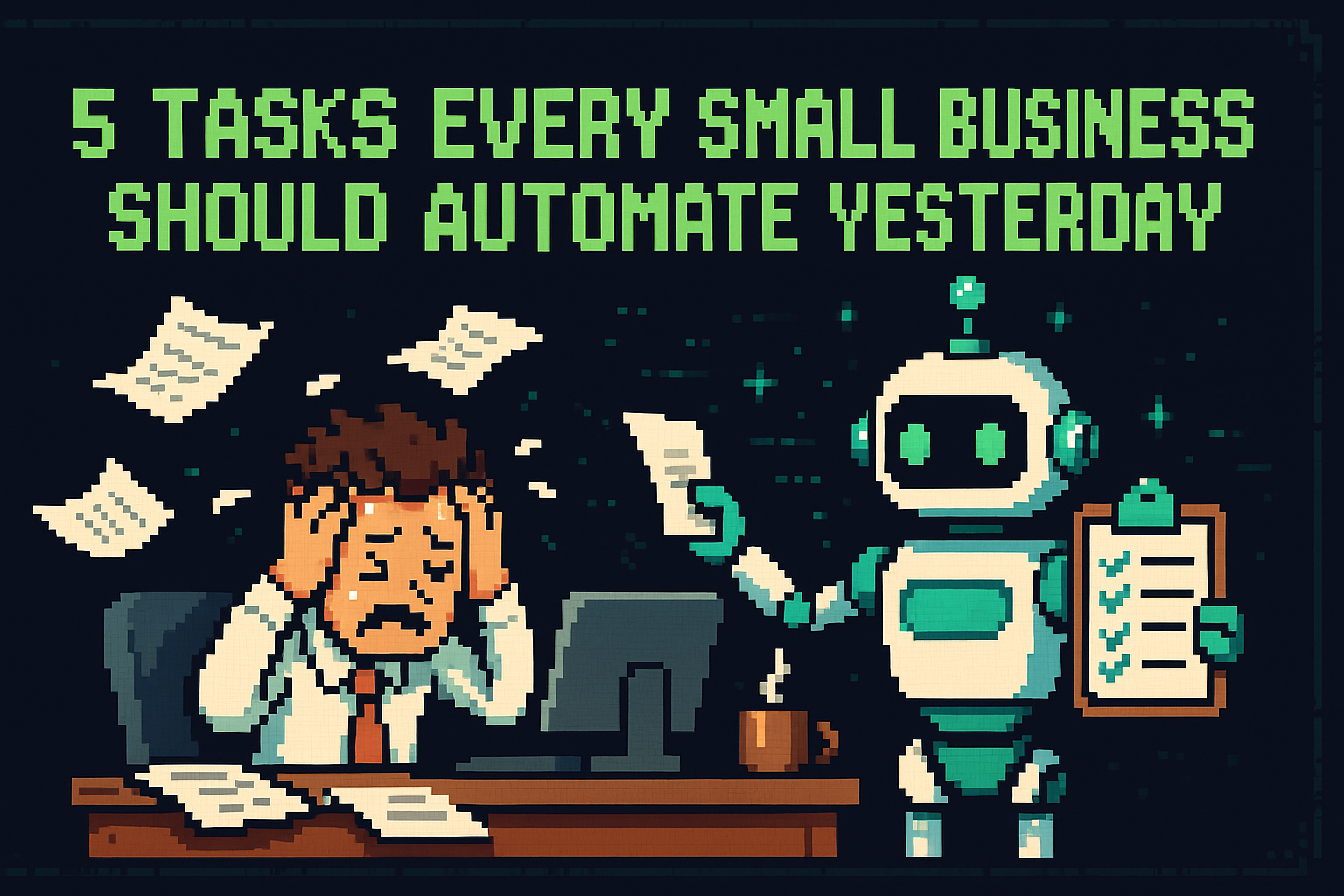
A lot of small business owners have mixed feelings about automation, and honestly, that makes sense. They have seen clunky tools, ugly email sequences, weird chatbot experiences, and "solutions" that create more maintenance than relief. So they conclude automation is overhyped. Sometimes it is. But usually the deeper problem is not automation itself. It is bad automation aimed at the wrong problem.
When automation is done poorly, it feels robotic, brittle, and annoying. When it is done well, most customers barely notice it as automation at all. They just experience a business that replies faster, follows up consistently, books more cleanly, and drops fewer balls. That is what owners should want. Not futuristic theater. Operational sanity.
▶ Mistake 1: automating before understanding the workflow
Many businesses try to automate chaos. They do not map the current process, identify the bottleneck, or decide what "better" actually means. They just bolt software onto a messy workflow and hope the mess becomes efficient. It does not. It becomes automated confusion, which is somehow even less charming than the manual version.
Good automation starts by asking a blunt question: where does the process currently break when people get busy? That is the place to start. Usually it is lead response, scheduling, follow-up, or data handoff. Pick one. Improve it. Then expand from there.
- ▶Do not automate everything at once
- ▶Do automate the repeatable bottleneck first
- ▶Measure the before-and-after result in plain numbers
▶ Mistake 2: expecting automation to replace judgment
Another common misconception is that automation should replace humans end-to-end. That is usually the wrong standard. Good automation handles the repetitive, predictable, memory-heavy parts of the workflow so humans can focus on judgment, relationships, exceptions, and closing. If you ask automation to do human work badly, you will hate it. Fair enough.
The better model is partnership. Let the system respond instantly, collect details, trigger reminders, route tasks, and maintain consistency. Let your people handle the nuanced parts that actually benefit from experience and context. That division of labor is where the value lives.
▶ Mistake 3: confusing activity with outcomes
Owners also get fooled by busy-looking dashboards. Hundreds of messages sent. Lots of workflows triggered. Fancy charts. Wonderful. But did response time improve? Did close rates improve? Did admin hours drop? Did fewer leads go cold? If the answer is no, then the automation may be active, but it is not useful.
Good automation should improve specific business outcomes. Faster replies. More booked calls. Better quote recovery. Fewer no-shows. Cleaner reporting. Less staff time spent on repetitive admin. If you cannot explain the win in one sentence, the automation is probably serving the software vendor better than it is serving you.
▶ What good automation actually looks like
Good automation is narrow enough to work, useful enough to matter, and flexible enough to survive real operations. It sounds like your business. It fits your workflow. It has rules for edge cases. It hands off cleanly to humans. And it removes friction instead of adding another panel for someone to babysit.
That is the right way to think about it: not as a magic replacement for labor, but as a system upgrade for repetitive work. Start there and automation becomes practical very quickly. Ignore that and you end up with a digital Rube Goldberg machine and a growing suspicion that technology is mocking you personally.
Want help automating a workflow like this?
▶ BOOK A DISCOVERY CALL