The 3 Things Every Service Business Should Automate Before Hiring Their Next Employee
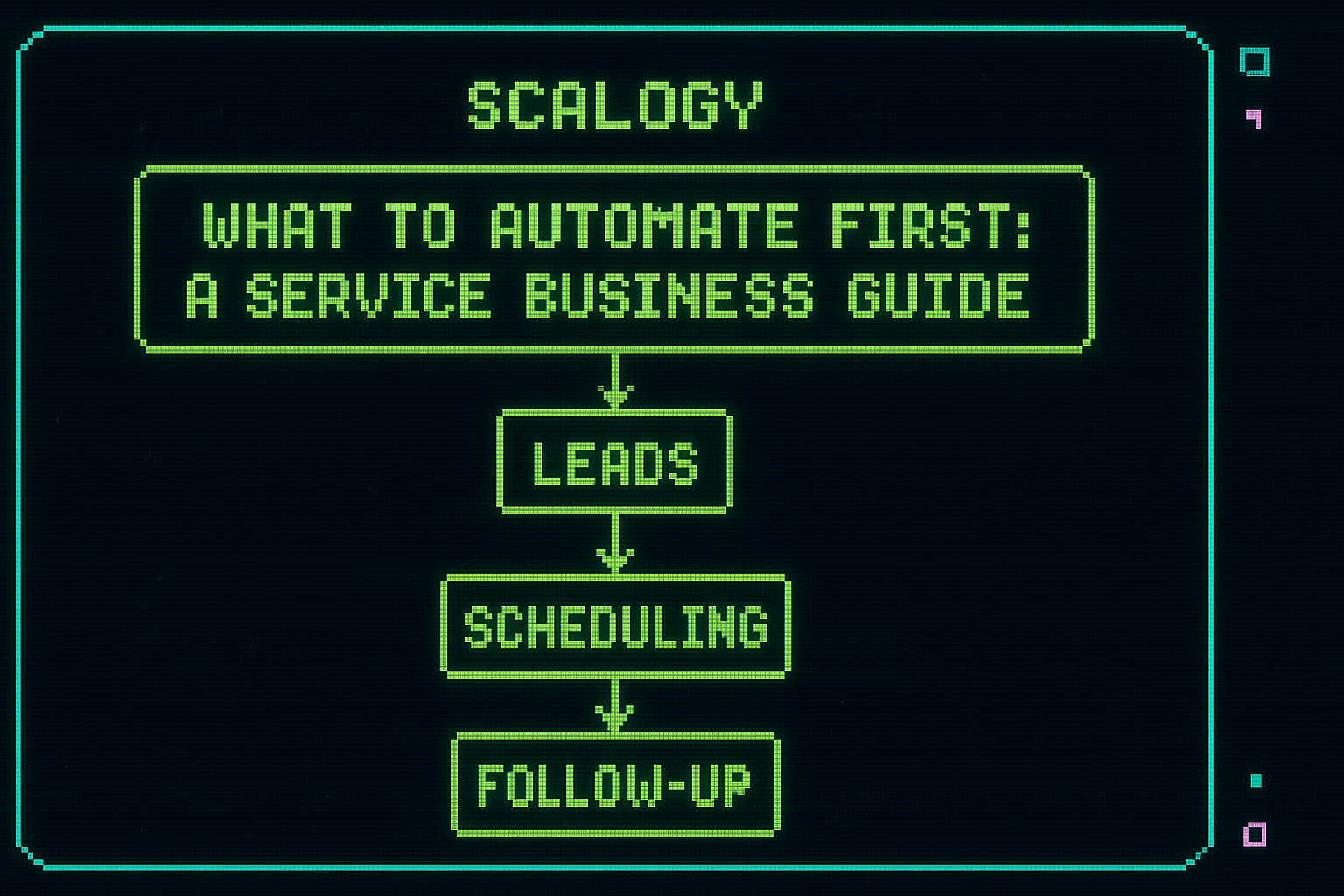
A lot of service businesses hit the same wall: the owner is overloaded, the team is stretched, and the obvious answer seems to be hiring another person. Sometimes that is correct. Often it is premature. Hiring into broken operations does not solve the underlying issue. It just adds salary, training time, and another human forced to work around a messy system.
If you want to automate service business operations intelligently, start with the workflows that repeat daily and directly affect revenue. We are talking about the administrative choke points that make good teams look disorganized: slow lead response, manual scheduling, and inconsistent follow-up. Fix those first. Then decide what headcount you still need.
▶ 1. Lead response
New leads should not depend on whether someone notices an email, hears the phone, or remembers to check the website inbox between jobs. That is not a process. That is wishful thinking dressed as hustle. An automated lead response system acknowledges inquiries instantly, asks the next question, and routes the lead into the right path.
This is usually the highest-ROI place to start because every missed lead is a revenue event, not just an admin problem. Faster response times lift conversion. Better qualification reduces wasted effort. And your team stops burning prime working hours chasing basic intake details that a well-built system can handle automatically.
- ▶Instant replies across forms, texts, and missed calls
- ▶Automatic qualification before human involvement
- ▶Consistent routing to the correct person or calendar
▶ 2. Scheduling
Scheduling looks simple until you calculate how much time disappears into reschedules, reminders, confirmations, and back-and-forth coordination. In many businesses, one admin hire ends up functioning like a human API between customers, technicians, sales staff, and the calendar. Useful, yes. Also wildly inefficient if the process is mostly repetitive.
Automating scheduling means customers can confirm the right appointment type, the team gets cleaner information, and reminders reduce no-shows without anyone manually sending messages all day. When scheduling works properly, the business feels more responsive and your staff gets time back for work that actually requires judgment.
▶ 3. Follow-up
Follow-up is where too many good opportunities quietly rot. Quotes go out and no one checks back. Old leads sit untouched. Past customers would probably buy again if anyone asked at the right time. Instead, the pipeline relies on memory and good intentions, which is another way of saying it relies on eventual disappointment.
A follow-up system should run without heroics. Estimate reminders, unscheduled-lead nudges, review requests, reactivation campaigns, maintenance outreach, and post-job check-ins can all be automated with rules and AI support. That creates consistency, which creates revenue, which makes the next hire more likely to be strategic instead of desperate.
▶ Hiring should amplify a good system, not compensate for a bad one
This is the part many owners skip. Hiring is leverage only when the underlying machine works. If your processes are broken, every new employee inherits confusion, context switching, and avoidable cleanup. You do not get scale. You get more expensive disorder.
Automate the predictable work first. Then measure what still genuinely needs a person. That sequence gives you better margins, cleaner roles, and a team that spends time on judgment, relationships, and execution instead of administrative firefighting. In other words, hire after you upgrade the system, not because you refuse to.
Want help automating a workflow like this?
▶ BOOK A DISCOVERY CALL