The Real Cost of Not Following Up on Estimates
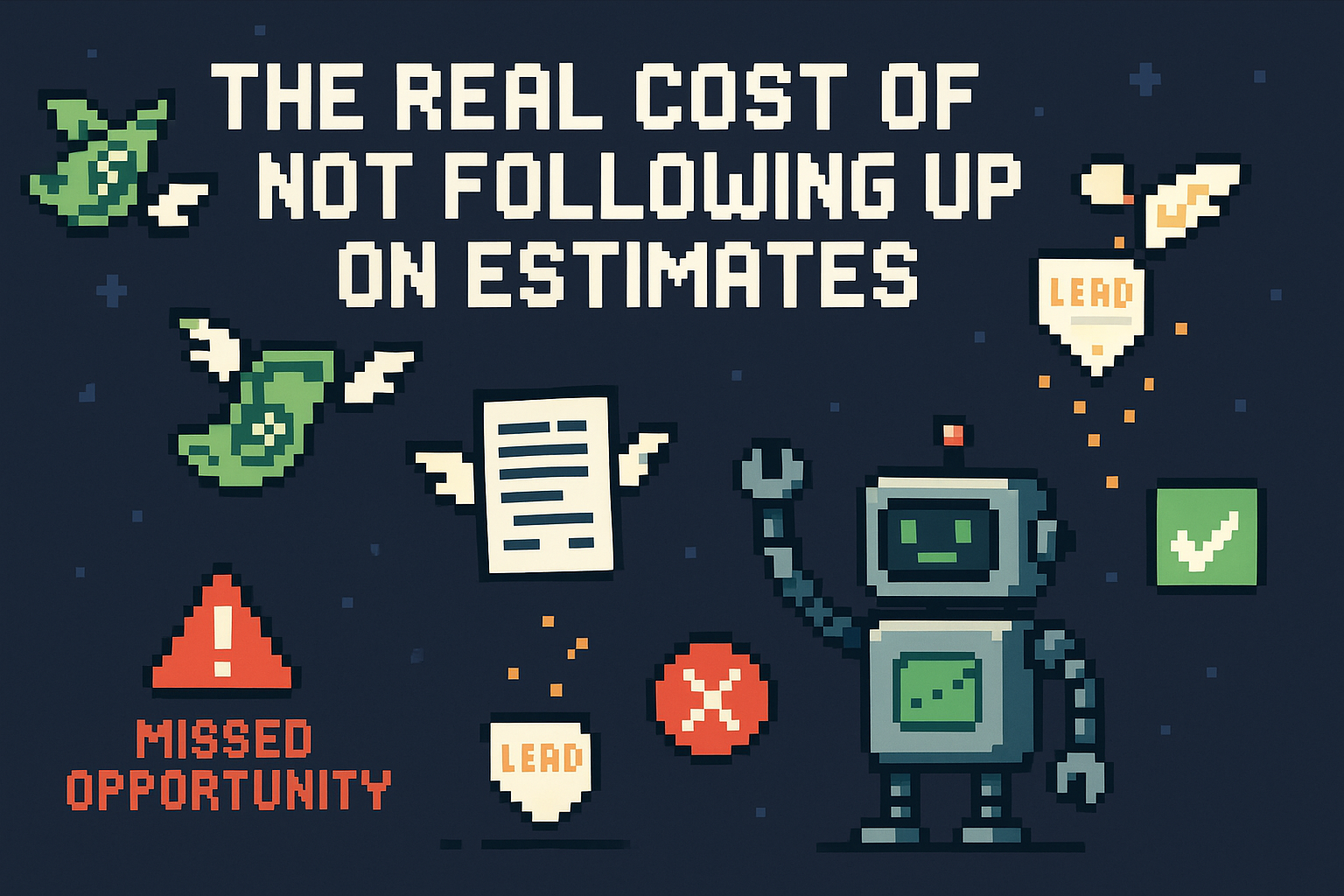
Most business owners know they should follow up. Few realize how expensive the lack of follow-up really is. A quote sent but never chased is often treated like a maybe. In reality, it is revenue in limbo.
The customer is not always saying no. Sometimes they are busy. Sometimes they are comparing bids. Sometimes they simply forgot. If you disappear, the job disappears with you.
▶ What the math looks like
Imagine 20 estimates a month. If 5 of them could have closed with a single timely follow-up and each job was worth $2,500, that is $12,500 a month sitting on the table. Over a year, that is $150,000.
And that is a conservative example. Many businesses leave even more money behind because nobody has a consistent follow-up system.
▶ Why people do not follow up
Usually it is not laziness. It is context switching. The estimate was sent yesterday. Then a new job came in. Then the crew needed help. Then the day ended. By the time anyone remembers, the lead is cold.
That is precisely the kind of failure automation exists to prevent.
▶ How to fix it
Build a follow-up sequence that runs automatically. Personalize it. Time it well. Track open rates and responses. Let an AI agent carry the memory so your team can focus on the work.
If you are losing one or two jobs a month to silence, that is already enough to justify automation.
- ▶Quotes need a follow-up clock
- ▶Silence should trigger a sequence
- ▶Revenue should not depend on memory
▶ Frequently asked questions
How much money am I really losing by not following up on quotes?
Probably more than you think. Picture 20 estimates a month where five could have closed with one timely follow-up, each worth 2,500 dollars. That is 12,500 dollars a month left on the table, or 150,000 dollars over a year. That is a conservative example. Many businesses leave even more behind because nobody runs a consistent follow-up system.
If a customer doesn't reply to my estimate, does that mean they said no?
Not always. A quote that was sent but never chased is revenue in limbo, not a closed door. Sometimes the customer is busy. Sometimes they are comparing bids. Sometimes they simply forgot. The risk is on your side: if you disappear after sending the estimate, the job tends to disappear with you.
Why does my team keep forgetting to follow up on estimates?
It is usually not laziness. It is context switching. The estimate goes out, then a new job comes in, then the crew needs help, then the day ends. By the time anyone remembers the quote, the lead has gone cold. That kind of everyday slip is exactly the problem automation is built to prevent.
How do I set up estimate follow-up so it doesn't depend on someone remembering?
Build a follow-up sequence that runs automatically. Personalize the messages, time them well, and track open rates and responses. Give every quote a follow-up clock so silence triggers the sequence on its own. Let an AI agent carry the memory, so your team can stay focused on the actual work and revenue no longer depends on anyone's recall.
Is automating follow-up worth it if I only lose a job or two a month to silence?
Yes. If you are losing one or two jobs a month because nobody followed up, that alone is enough to justify automating the process. Every quote left unanswered is revenue sitting in limbo, and a consistent automated sequence keeps those estimates from quietly going cold while your team is busy with everything else.
Want help automating a workflow like this?
▶ BOOK A DISCOVERY CALL