AI vs Virtual Assistant: What’s the Difference and Which Does Your Business Actually Need?
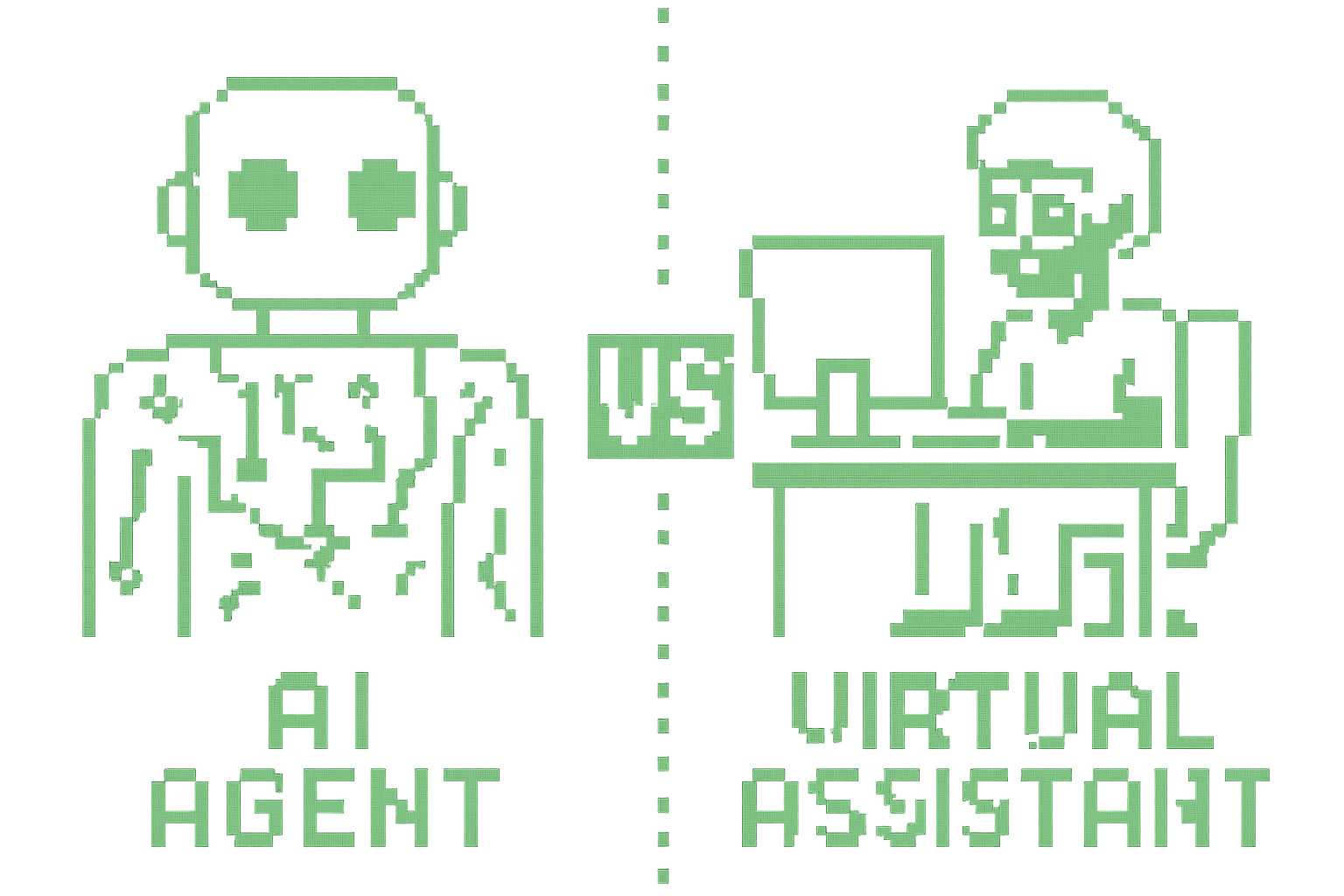
When people compare an AI agent to a virtual assistant, they usually ask which one is cheaper. Fair question. Wrong first move.
The better question is this: what kind of work needs to get done every day, and what breaks when it does not get done fast? If your business is drowning in repeat tasks, after-hours messages, missed calls, lead follow-up, appointment reminders, and basic customer questions, an AI agent can be a strong fit. If you need someone to handle edge cases, make judgment calls, manage relationships, and deal with messy human situations, a virtual assistant may be the better pick.
▶ What a virtual assistant actually does
A virtual assistant is a human remote worker. They can answer emails, manage calendars, handle customer support, follow up with leads, and take admin work off your plate. The big advantage is obvious: a human can understand context, read tone, and deal with weird situations.
Virtual assistants work best when the job includes relationship management, inbox handling with nuance, scheduling across multiple people, personalized client follow-up, or project coordination with exceptions.
▶ What an AI agent actually does
An AI agent is not just a chatbot glued to your website. A real AI agent is built to perform a specific job inside your business. It can answer common questions instantly, respond to leads in seconds, book appointments, qualify prospects before they reach your team, send follow-ups by text or email, capture missed calls after hours, and route inquiries to the right person.
The strength of AI is speed, consistency, and scale on repeatable work. The weakness is that it should not be trusted with every high-stakes decision or unusual situation without guardrails.
- ▶Repeatable, high-volume, time-sensitive work: AI wins
- ▶Relationship-heavy, complex, exception-driven work: VA wins
- ▶Growing business that wants real leverage: both in the right order
▶ Where business owners get burned
Mistake one: hiring a human for robot work. If someone spends half their day copying data, sending the same reminders, or answering the same five questions, you are paying a person to be middleware.
Mistake two: expecting AI to replace judgment. AI needs clear scope, strong setup, and a defined lane. Mistake three: buying software instead of solving workflow. The real problem is usually that lead flow, communication, and follow-up are messy.
▶ Sometimes the right answer is both
In a lot of small businesses, the best setup is AI first, human second. Let the AI agent do the front-line work: pick up the missed call, answer the first question, collect the lead details, book the appointment, send the reminder. Then let your virtual assistant or team member handle the cases that need a real person.
Your human time goes to the hard stuff. Your AI handles the repeat stuff. Nobody is wasting time fighting the same small fires every day.
Want help automating a workflow like this?
▶ BOOK A DISCOVERY CALL