AI for Landscapers: Stop Quoting Jobs You Never Follow Up On
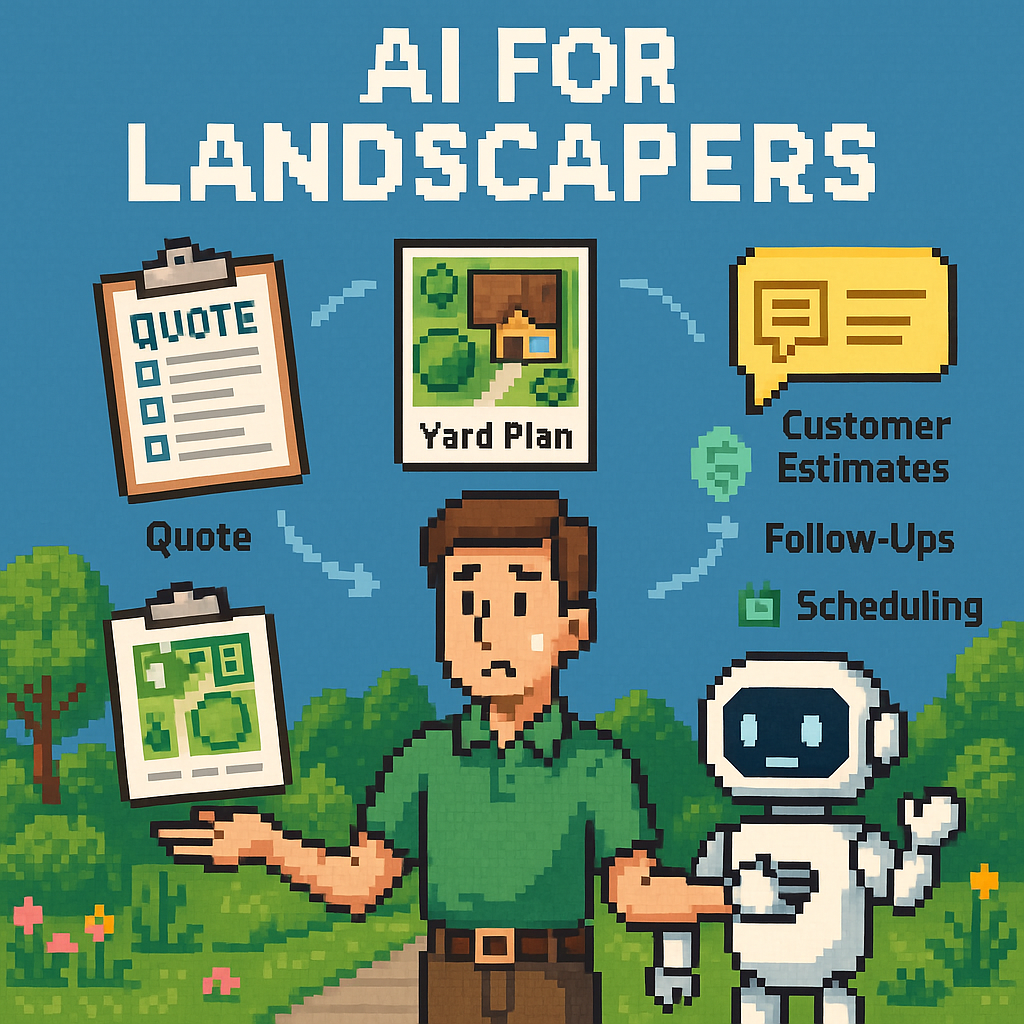
Landscaping businesses get busy in a very specific way. The season hits, estimate requests pile up, crews are booked, and everyone is moving fast. On paper, that looks like a healthy business. In reality, it often creates an estimate graveyard full of half-finished conversations, slow replies, and quotes that were technically sent but never actually managed toward a decision.
That is why AI for landscaping business is not about novelty. It is about control. If your team is excellent at the work but inconsistent in the response process, you end up attracting opportunities you are too disorganized to convert. Nature is unforgiving. So is a prospect who requested three quotes online and heard back from the other two first.
▶ The first leak is response time
A homeowner asking for mowing, design work, drainage help, or a full outdoor renovation usually contacts multiple companies. If your response takes a day or two because the estimator is on-site and the office is swamped, you are starting behind. Fast response does not guarantee the job, but slow response absolutely makes losing easier.
An AI agent can answer immediately, capture property details, ask about job type and timeline, and organize the request before a human ever steps in. That means the lead is acknowledged, qualified, and moved forward while your team is still out working instead of playing inbox roulette.
- ▶Instant replies to website forms and estimate requests
- ▶Automatic collection of property and project details
- ▶Cleaner handoff to the estimator or sales workflow
▶ The second leak is quote follow-up
Landscaping quotes often involve larger ticket sizes, optional upgrades, scheduling variables, and customers who need time to think. That makes follow-up essential. Yet this is exactly where many companies go silent because the same person selling the work is also measuring jobs, coordinating crews, and dealing with weather-related reschedules. Very efficient system if the goal is forgetting money exists.
A follow-up agent keeps those quotes alive. It can send check-ins, answer common questions, prompt for decision timelines, and re-engage leads that opened the proposal but never responded. This does not replace human sales judgment. It makes sure good opportunities do not disappear simply because the week got chaotic.
▶ The third leak is seasonal overload
Seasonality creates a strange trap for landscapers. When business surges, it feels like proof everything is working. But surge periods are also when operations fail most visibly: slow callbacks, missed estimate requests, delayed scheduling, and weak follow-up. Being busy is not the same thing as being efficient, and the gap is expensive.
AI agents help absorb that surge by handling repetitive communication at scale. They can schedule site visits, send reminders, route urgent requests, and keep prospects informed while the human team focuses on scoping and execution. That lets you grow capacity without immediately defaulting to administrative sprawl.
▶ The practical upside
For landscaping companies, the upside is straightforward: more quotes handled properly, more follow-up completed, fewer leads lost to delay, and a smoother sales process during the exact months when demand is strongest. That translates into better close rates and better use of the marketing effort you already pay for.
Start with the estimate workflow. If requests are coming in but revenue is not keeping pace, the issue may not be lead generation at all. It may be the handoff between inquiry, quote, and follow-up. Fix that with automation and the season becomes something you capitalize on instead of merely survive.
Want help automating a workflow like this?
▶ BOOK A DISCOVERY CALL