5 Tasks Every Small Business Should Automate Yesterday
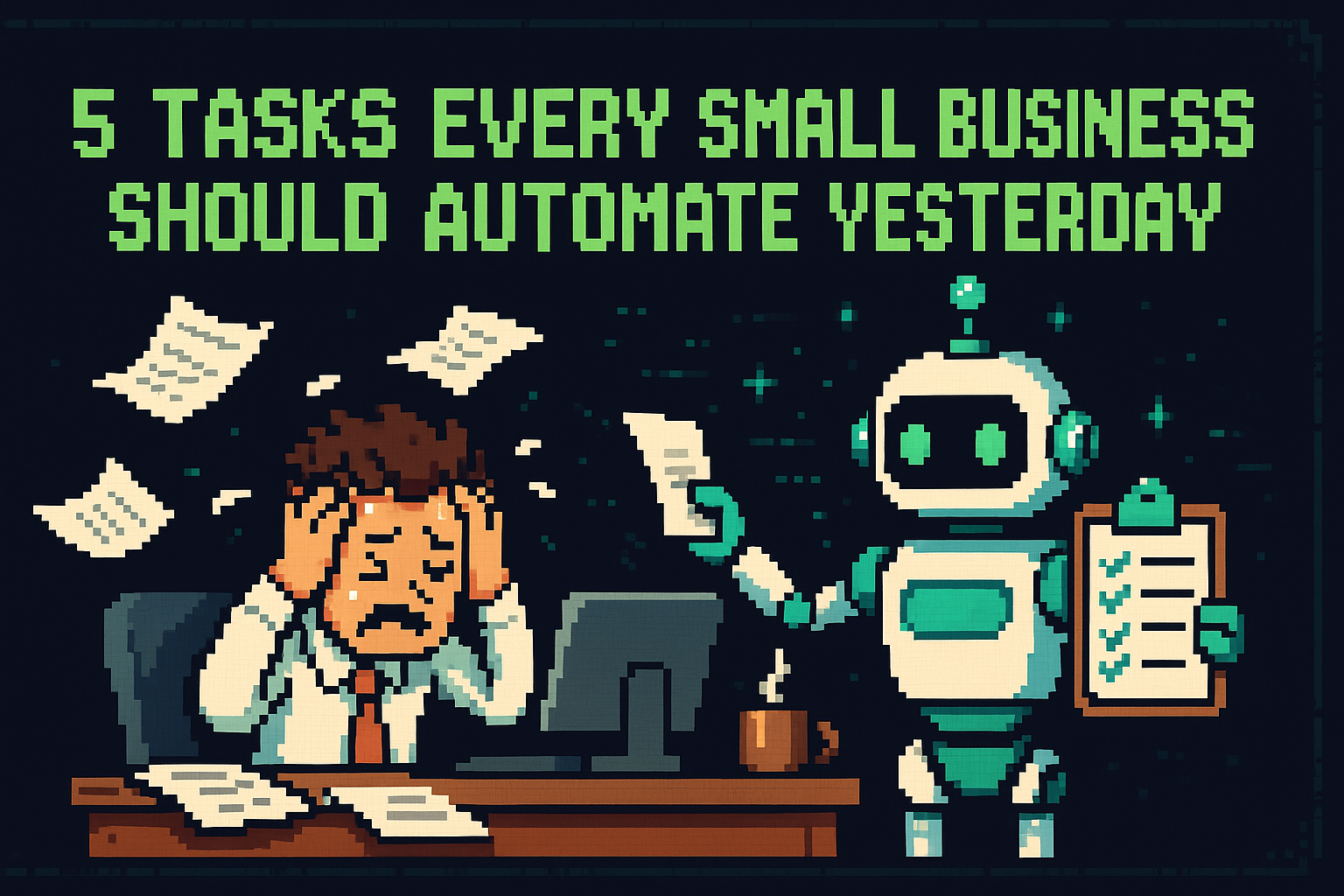
There is a specific kind of business pain that feels normal only because everyone around you is living with it too. Leads sit unanswered. Customers wait for updates. Estimates get buried. Calendars get shuffled by hand. Reports get rebuilt every week from scratch.
None of those tasks are core to your craft. They are overhead. And overhead is where automation creates the biggest immediate return.
▶ 1. New lead response
Speed matters. Responding in five minutes instead of five hours can be the difference between winning a job and losing it. An AI lead response agent can acknowledge the inquiry, gather key details, and route the lead automatically.
The best part is consistency. Every lead gets the same professional response every time, even when you are in the middle of a job site, in a meeting, or asleep.
▶ 2. Appointment scheduling
Scheduling is a dumb place to spend human attention. Let clients choose from your actual availability, then let the system confirm and remind them. That alone removes dozens of back-and-forth messages every month.
▶ 3. Quote follow-up
Unfollowed quotes are silent revenue leaks. The customer is interested enough to ask, but not enough to chase you forever. A structured follow-up sequence keeps the conversation alive without making your staff babysit a CRM.
▶ 4. Status updates
Customers want to know what is happening. If your team has to stop work just to send an update, the business is paying twice: once for the interruption and once for the delay. Automated updates keep people informed without slowing the work.
▶ 5. Reporting
If you are manually compiling weekly numbers, you are burning time on something a machine should do. Good automation turns raw data into a summary you can actually use.
The real benefit is not just time saved. It is better decisions, made sooner.
- ▶Automate what repeats
- ▶Automate what breaks when you are busy
- ▶Automate what delays revenue
▶ Frequently asked questions
Which tasks should a small business automate first?
Five tasks most small businesses still handle by hand are new lead response, appointment scheduling, quote follow-up, customer status updates, and reporting. None of them are core to your craft. They are overhead, and overhead is where automation creates the biggest immediate return. A simple rule: automate what repeats, what breaks when you are busy, and what delays revenue.
Why does responding to new leads quickly matter so much?
Speed can be the difference between winning a job and losing it, so replying within minutes instead of hours matters. An AI lead response agent can acknowledge the inquiry, gather key details, and route the lead automatically. Just as important is consistency. Every lead gets the same professional response, even when you are on a job site, in a meeting, or asleep.
What happens to quotes that never get followed up?
Unfollowed quotes are silent revenue leaks. The customer was interested enough to ask, but not interested enough to keep chasing you. A structured follow-up sequence keeps the conversation alive automatically, so your staff do not have to babysit a CRM to make sure every estimate gets a nudge.
Why should I automate status updates to customers?
Customers want to know what is happening. If your team has to stop work just to send an update, the business pays twice: once for the interruption and once for the delay. Automated updates keep customers informed without slowing down the work itself.
How much time can automated scheduling actually save?
Scheduling is a poor use of human attention. Clients can choose from your actual availability, and the system can handle confirmations and reminders. That alone removes dozens of back-and-forth messages every month. Your team stops shuffling calendars by hand and can put that attention back into real work.
Want help automating a workflow like this?
▶ BOOK A DISCOVERY CALL