The 5-Minute Lead Response Rule: Why Speed Kills (Your Competition)
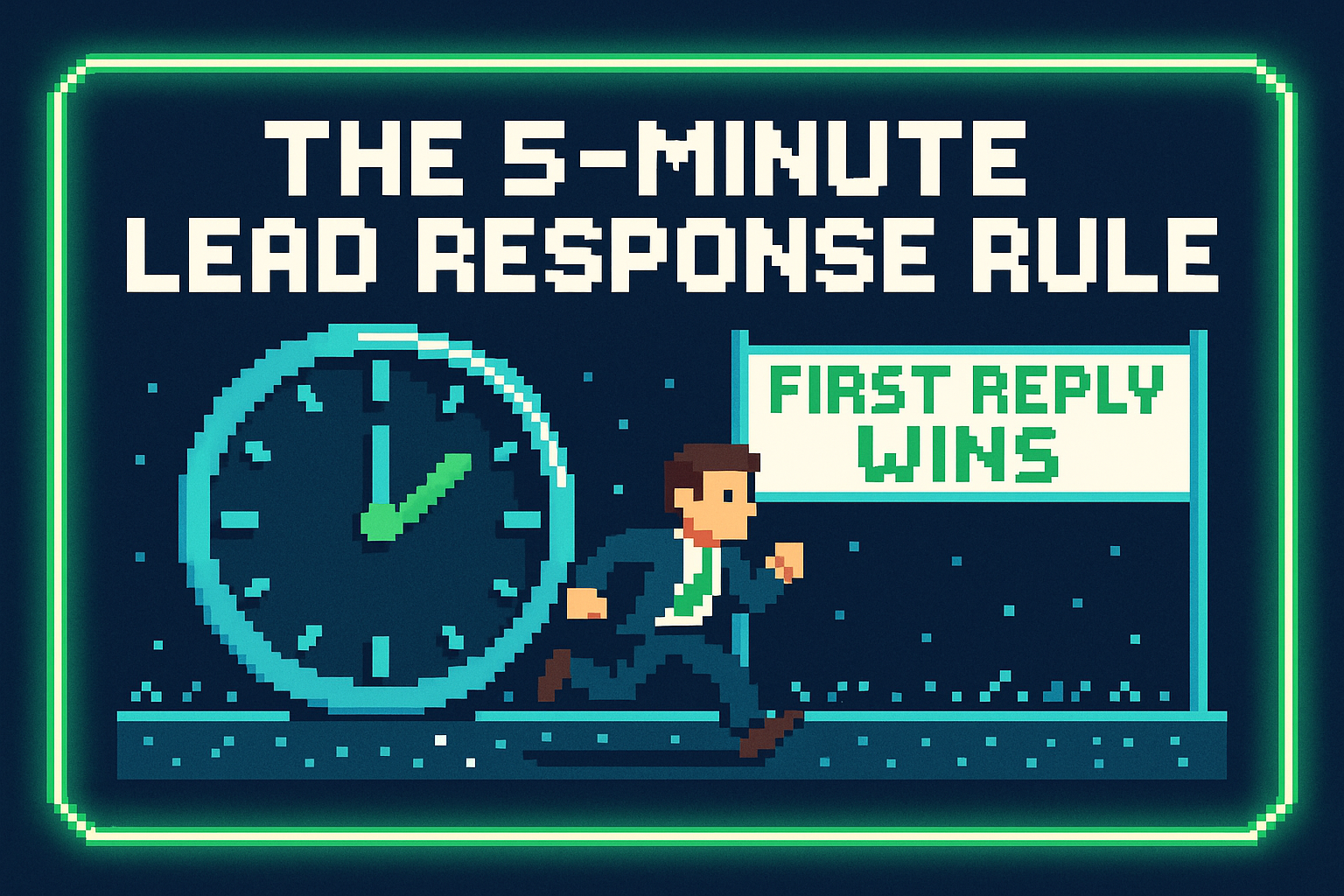
Most businesses do not have a lead problem. They have a speed problem.
Owners spend money on ads, SEO, referral partnerships, and websites. Then a lead finally comes in and sits there unanswered. Someone fills out a form at 7:12 PM. The call goes to voicemail because the front desk is busy. A text hits the website chat on Saturday morning. Nobody replies until Monday. By then, the lead is gone - not because your service was worse, but because somebody else moved first.
▶ Why 5 minutes matters
When a prospect reaches out, they are in motion. They are comparing options. They are solving a problem right now. The first business that responds with something useful usually wins the next step.
Fast response creates three things immediately: trust (you look organized and professional), momentum (the conversation keeps moving), and conversion lift (more leads turn into booked calls, quotes, or appointments).
▶ What slow response is really costing you
Say your business gets 40 inbound leads a month and your average customer value is $2,000. If slow response causes you to lose even 3 to 5 extra deals per month, that is $6,000 to $10,000 gone. Not on paper. In reality.
And the worst part? Most owners do not see it, because missed speed does not show up as a line item in QuickBooks. It shows up as: lead quality has been bad lately, ads are getting expensive, people shop around too much now.
▶ What a fast response system looks like
This is exactly where an AI agent can do damage in a good way. Not by replacing your team, but by making sure every lead gets the first response immediately, even when your human team is busy or offline.
- ▶Instant text or email acknowledgment
- ▶Basic qualification questions
- ▶Booking link or next-step prompt
- ▶Missed call text-back
- ▶After-hours and weekend coverage
- ▶Automatic reminders and follow-ups
▶ The bottom line
If your lead response time is measured in hours, you are handing revenue to faster competitors every week. The fix is not mysterious. Respond within five minutes, every time, even after hours, even when the team is slammed, even on weekends.
Because in service businesses, speed is not just customer service. Speed is sales.
▶ Frequently asked questions
Do I actually need more leads, or could something else be holding back my sales?
Most businesses do not have a lead problem. They have a speed problem. Owners spend money on ads, SEO, referral partnerships, and websites, and then a lead comes in and sits unanswered. By the time someone replies, the prospect has often gone with whoever moved first, not because your service was worse.
How much revenue could slow replies to inquiries be costing a business like mine?
Picture a business getting forty inbound inquiries a month with an average customer value of two thousand dollars. If slow response loses even three to five extra deals a month, that is six to ten thousand dollars gone. That is not a paper loss. It is real revenue handed to faster competitors.
Why don't I notice the sales I'm losing from slow response?
Missed speed does not show up as a line item in QuickBooks. Instead it disguises itself as other complaints: lead quality has been bad lately, ads are getting expensive, or people shop around too much now. The real cause is often that prospects heard from a quicker competitor before they heard from you.
What should a fast lead response setup actually include?
A solid setup makes sure every lead gets a first response immediately, even when your team is busy or offline. That means instant text or email acknowledgment, basic qualification questions, a booking link or next-step prompt, missed call text-back, after-hours and weekend coverage, and automatic reminders and follow-ups. The goal is supporting your team, not replacing it.
Why do inquiries that come in after hours so often turn into lost sales?
A form filled out in the evening or a website chat on Saturday morning can sit until Monday. Meanwhile the prospect is in motion, comparing options and trying to solve a problem right now. The first business to respond with something useful usually wins the next step, so waiting hands the job to someone faster.
Want help automating a workflow like this?
▶ BOOK A DISCOVERY CALL